Getting Started on Your Homeschool Journey
There is so much information about homeschooling that it can seem overwhelming. We've gathered information to help you make your homeschooling decision and to inform you about laws and other legal issues. Here you'll find research and statistics that support the notion that homeschooling provides specific advantages to children and families. And we'll help you take the first steps on the road of your own homeschooling adventure.
Why Homeschool?
The first step to homeschooling is making your decision to home educate your child. It is important to become informed and knowledgeable about some of the main concerns you may have. Explore these areas of our website to learn more about the initial decision to homeschool.
How to Begin
You've decided to homeschool your child! But what comes first? For many parents, knowing where to begin in the homeschooling process can be confusing. Although there seems to be so much information available, it may be hard to get your questions answered. We've put together some resources to start you on your journey, giving you the information and motivation you need to successfully begin to homeschool in Vermont.
Legal/Homeschool Laws
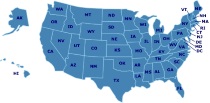
Laws that regulate home education vary from state to state. It is important to understand the legal requirements in your state and to be aware of legislative and other legal issues that affect homeschoolers in your community. We've compiled resources that will help you become informed. Although homeschooling is legal in all 50 states, and the vast majority of homeschoolers face no problems, you may find that you need legal assistance at some point in your homeschooling career. We've compiled a list of resources to help you find the support you need. And if you'd like to become more involved in working towards homeschooling freedoms, we discuss some of the issues facing homeschoolers that we hope you find compelling.
History of Homeschooling
How did homeschooling start? When did it become legal? Who were the key players in making homeschooling the social movement it is today? The story of the history of homeschooling in the United States is a compelling tale of dedication, innovative ideas, and personal conviction and sacrifice. We have put together a history of this educational and social phenomenon, hoping it will inspire you to learn from the early and more recent pioneers of home education in America.
What's Popular
State of Vermont Department of Education (VTDOE)
This site provides information about the Vermont Department of Education's programs, services, and initiatives to all who are interested in Vermont’s education community.
The Myth of Socialization
If socializing is a problem for homeschool families, it is rare. The homeschool socialization myth is a misconception perpetrated by people who know little or nothing of the benefits or facts. Some parents believed they would be breaking the law by not sending their children to public school. Unfortunately, there are movements in some states to pass such laws. But as of yet, it is still lawful to homeschool. Most states require documentation, which is reasonable. Other states are lax. Homeschool...
How I Shelter My Children
When children are nurtured, sheltered and loved, they can fully develop their social skills. Socialization doesn't just mean knowing how to act around other 12 year old kids. It means knowing how to function in our big world--a world that is much broader than the four walls of a classroom.
Compulsory School Age in Vermont
The laws in Vermont state that you must enroll your child in school from the day he or she turns 6 years old until he or she turns 16. This HSLDA article details the Vermont state compulsory school age regulations. 
Vermont Home Education Network
Vermont Home Education Network is an advocacy organization, which maintains a strong homeschool lobby at the state level and acts as a watchdog by monitoring legislation relevant to homeschooling issues. They also provide networking opportunities for home educators in the state.
Parents Educating at Home (PEAH)
Parents Educating at Home (PEAH) has as its goal to network with businesses and organizations to raise the awareness of home schooling in the community. They work to manage and communicate discounts and savings that home schooling families can receive as well as continually work to obtain additional discounts both nationally and locally on behalf of the homeschooling community. In order to become a member, you must pay a fee.
Scholastic Achievement and Demographic Characteristics of Home School Students in 1998
This report presents the results of the largest survey and testing program for students in home schools in 1998.
HSLDA's Position on Tax Credits Generally
Although a credit or deduction could be helpful for homeschoolers, HSLDA opposes any tax break legislation that could come with governmental regulations. Homeschoolers have fought far too long and much too hard to throw off the chains of government regulation that hinder effective education and interfere with liberty. It would be inconsistent and foolhardy to accept tax incentives in exchange for government regulation. However, HSLDA supports tax credits that promote educational choice without t...
How to Comply with Vermont's Homeschool Law
Vermont law specifically refers to homeschooling in 16 V.S.A. § 11(a)(21) and 16 V.S.A. § 166b. To homeschool under this statute, you’ll need to follow these guidelines. Necessary steps include sending in a written enrollment notice, submitting a narrative describing the content to be provided in each subject area, obtaining acknowledgement of compliance, teaching the required subjects and assessing your child annually. 
How to Withdraw Your Child from School in Vermont
If you want to start homeschooling during the school year and your child is currently enrolled in a public or private school, HSLDA recommends that you formally withdraw your child from that school. If you are going to start homeschooling after the school year is over, and your child is considered enrolled for the following year, we recommend that you withdraw your child before the next school year begins, so that the school does not mark your child as absent or truant.
Are You Qualified to Teach Your Child at Home?
Can anyone with the means and the will teach their own child academics? Can anyone can teach their own child at home? For most Americans, if you have the means and the will, you can successfully homeschool your children.
Marketing to Homeschoolers: Specialty Retailers Find a New Niche
If you’re looking for a perfect niche market for your specialty toys, you might try homeschoolers. Since they are outside of the mainstream, they tend to be more skeptical about mass-marketed products and more inclined to make unorthodox choices, as a scan of homeschooling websites and a survey of five homeschooling moms revealed.
Getting Started Homeschooling in New York
New York State LEAH (Loving Education at Home) provides this guide to getting started with homeschooling in New York. This list of common questions and straightforward answers will help prepare you for this new adventure!
3 Reasons NOT to Homeschool
Each family comes with its own dynamic – a beautifully complicated medley of philosophies and needs involving a family’s heritage or culture, parenting style, financial stability, spiritual or religious preference, communication, and of course, educational goals and background. It may not be the right choice for a family to homeschool. These reasons not to homeschool can give you some food for thought.
Transitioning from Parent to Homeschool Teacher: Are You Qualified?
Some parents believe they aren't qualified to teach their own children. Other parents are intrigued by homeschooling, but couldn't possibly imagine themselves as both parent and teacher. Is it possible for average parents to take on the enormous job of educating their children? Aren't years of specialized training required to become a good teacher? The answer to both of these questions is "yes." How is that possible? Because learning at home is very different from learning in a classroom.
Resources
The Homeschooling Revolution
A readable, scholarly overview of the modern day homeschooling movement. Includes vignettes from homeschooling families, war stories, research information, media reaction, footnotes, and statistics.
A Different Kind of Teacher: Solving the Crisis of American Schooling
In 1991, shortly after receiving both the New York State and New York City Teacher of the Year Awards, John Gatto resigned to begin a new career as an education reform advocate. In this collection of 16 essays, Gatto analyzes the problems of American education and suggests solutions for revitalizing the system — prescriptions that run counter to current trends.
Should I Home School?: How to Decide What's Right for You & Your Child

Have questions about homeschooling? This book has the answers. The information in this book will help you decide if homeschooling is right for you and your child. 

So You're Thinking About Homeschooling: Fifteen Families Show How You Can Do It
Confused and intimidated by the complexities of homeschooling, many sincere parents never get past the "thinking about it" stage. Now Lisa Whelchel - herself a homeschooling mother of three - introduces fifteen real families and shows how they overcome the challenges of their unique homeschooling situations. This nuts-and-bolts approach deals with common questions of time management, teaching weaknesses, and outside responsibilities, as well as children's age variations, social and sports involvement, learning disabilities, and boredom. Seeing a wide variety of successfully homeschooling families in action will give parents the confidence to make their own dream of home-based education a reality.
Real-Life Homeschooling: The Stories of 21 Families Who Teach Their Children at Home

The book that shows homeschooling in action!

What does it really mean when parents say they homeschool their child or children? For Rhonda Barfield -- a homeschooler for the past 10 years -- the definition is as diverse as the 21 families she studies in this eye-opening book.

Real-Life Homeschooling

From the city to the country, apartments to split-levels, you'll enter each household and see education in action. Discover the challenges and rewards of tailoring instruction to each child's needs while catering to his or her inquisitiveness and curiosity. See why the number of children being taught by their parents is growing nationwide -- at home, there are no overcrowded classrooms, no unknown dangers lurking in the halls, and no doubts as to the quality of the education.

Whether you are just contemplating homeschooling or are a veteran seeking fresh ideas and help in overcoming obstacles -- look no further: Real-life Homeschooling shows just how practical and rewarding it is to educate children and provide them with what they need most -- you!

The Exhausted School: Bending the Bars of Traditional Education
These 13 essays, presented at the 1993 National Grassroots Speakout on the Right to School Choice, illustrate how education reform actually works. Written by award-winning teachers and their students, these essays present successful teaching methods that work in both traditional and nontraditional classroom settings. “Gatto’s voice is strong and unique.” — Thomas Moore, author of Care of the Soul
Homeschool Open House
Personal insights from 55 families worldwide about a real day of homeschooling. Includes homeschool illusions, family culture, learning and family style, parenting strategies, chores and organization, family management, personal empowerment, decision making, change flexibility, resources, and questions to consider before deciding to homeschool. A private tour of homeschooling homes and reflective thoughts from families. Also includes five year follow-ups from families in HOMESCHOOLING: A PATCHWORK OF DAYS.
Dumbing Us Down: The Hidden Curriculum of Compulsory Schooling
This radical treatise on public education has been a New Society Publishers' bestseller for 10 years! Thirty years of award-winning teaching in New York City's public schools led John Gatto to the sad conclusion that compulsory governmental schooling does little but teach young people to follow orders as cogs in the industrial machine. In celebration of the ten-year anniversary of Dumbing Us Down and to keep this classic current, we are renewing the cover art, adding new material about John and the impact of the book, and a new Foreword.
Homeschooling: A Patchwork of Days: Share a Day With 30 Homeschooling Families
From a bedroom community in Nebraska to a farm in Vermont, from families who rely on workbooks to those who have sworn them off, this in-depth examination of the lives of homeschoolers covers a wide range of people and methods. When author Nancy Lande started homeschooling more than 10 years ago, this is the book she wanted that didn't exist. What better way to create your homeschool than reading about others and picking and choosing the styles that appeal to you? Lande has corralled a variety of homeschoolers and, with some deft editing, allowed them to speak for themselves. Every chapter features a different household on any given day. Many of the writers are mothers, but a stay-at-home dad and several children tell their tales as well. Their detailed descriptions start in the waking hours of morning and get down to the nitty-gritty information of everyday life in a homeschool: how moms fit in showers, how chores are divvied up, how reading and research are gently initiated, how parents set aside time for themselves.

These writers invite the reader into their homes and advise, "Don't mind the mess." Their passages are often funny and unflinchingly honest. They aren't embarrassed to tell you they whipped out SpaghettiOs for a hurried lunch or stole a peek at CNN while ignoring the chaos in the playroom. Some of the families have created highly structured school environments within their homes, with desks and sharpened pencils. Others promote freestyle learning, with their children sprawled across the house working on projects or reading in between walking the dog, playing games, and riding bikes. The majority of families here live in Pennsylvania, the author's home state, but one writes from as far away as Scotland, another lives on a mountain in Alaska, and yet another checks in from a college town in Texas. Their learning logs, reading lists, and journal entries, along with family photos, help illustrate the book. The quilt they piece together is a great service to those wondering how to approach homeschooling. --Jodi Mailander Farrell

Kingdom of Children : Culture and Controversy in the Homeschooling Movement (Princeton Studies in Cultural Sociology)

More than one million American children are schooled by their parents. As their ranks grow, home schoolers are making headlines by winning national spelling bees and excelling at elite universities. The few studies conducted suggest that homeschooled children are academically successful and remarkably well socialized. Yet we still know little about this alternative to one of society's most fundamental institutions. Beyond a vague notion of children reading around the kitchen table, we don't know what home schooling looks like from the inside.

Sociologist Mitchell Stevens goes behind the scenes of the homeschool movement and into the homes and meetings of home schoolers. What he finds are two very different kinds of home education--one rooted in the liberal alternative school movement of the 1960s and 1970s and one stemming from the Christian day school movement of the same era. Stevens explains how this dual history shapes the meaning and practice of home schooling today. In the process, he introduces us to an unlikely mix of parents (including fundamentalist Protestants, pagans, naturalists, and educational radicals) and notes the core values on which they agree: the sanctity of childhood and the primacy of family in the face of a highly competitive, bureaucratized society.

Kingdom of Children aptly places home schoolers within longer traditions of American social activism. It reveals that home schooling is not a random collection of individuals but an elaborate social movement with its own celebrities, networks, and characteristic lifeways. Stevens shows how home schoolers have built their philosophical and religious convictions into the practical structure of the cause, and documents the political consequences of their success at doing so.

Ultimately, the history of home schooling serves as a parable about the organizational strategies of the progressive left and the religious right since the 1960s.Kingdom of Children shows what happens when progressive ideals meet conventional politics, demonstrates the extraordinary political capacity of conservative Protestantism, and explains the subtle ways in which cultural sensibility shapes social movement outcomes more generally.

Featured Resources

As an Amazon Associate, we earn from qualifying purchases. We get commissions for purchases made through links on this site.

So You're Thinking About Homeschooling: Fifteen Families Show How You Can Do It
Confused and intimidated by the complexities of homeschooling, many sincere parents never get past the "thinking about it" stage. Now Lisa Whelchel - herself a homeschooling mother of three - introduces fifteen real families and shows how they overc...
Pass Your New York DMV Test Guaranteed! 50 Real Test Questions! New York DMV Practice Test Questions
This book is written by a former DMV classroom instructor. He shares the 50 most common questions and answers to the New York DMV written test. A great guide to help your teen pass the DMV test on their first try.
Real-Life Homeschooling: The Stories of 21 Families Who Teach Their Children at Home
The book that shows homeschooling in action! What does it really mean when parents say they homeschool their child or children? For Rhonda Barfield -- a homeschooler for the past 10 years -- the definition is as diverse as the 21 families she studi...
Only Child: Writers on the Singular Joys and Solitary Sorrows of Growing Up Solo
Only children don’t have to share bedrooms, toys, or the backseat of a car. They don’t have to share allowances, inheritances, or their parents’ attention. But when they get into trouble, they can’t just blame their imaginary friends. In Only Child, ...
TruthQuest History
The TruthQuest History series consists of ten volumes that serve as guides for parent wishing to use real books in their approach to history education. They are full of book recommendations, along with information on the topics of study. There are al...